
03 , Government · Enterprise · Compliance
Government Influencer Marketing Platform
A compliance-first campaign ecosystem built for two audiences who had never worked together before.
The Problem
Building a product for the first time is hard. Most teams get it wrong not because they lack intelligence, but because they lack reference points. That is just how new products start.
A government body wanted to run influencer marketing campaigns across Instagram and YouTube. They had the intent and the budget. What did not exist yet was a system to make it work.
The platform needed to serve four distinct roles: a super admin overseeing all participating ministries, ministry admins publishing campaigns and reviewing creators, individual influencers applying and delivering content, and influencer organisations managing rosters of creators.
Two weeks to design it. From zero.
My Role
Sole Product Designer. Owned every flow across all four user roles , from super admin onboarding to influencer delivery confirmation. Designed from zero with no existing system as reference. Oversaw the full development handoff and build process.
Constraints & Context
Timeline
Full multi-role system designed from zero in 2 weeks. Development oversight for a further 2.5 weeks.
Domain Gap
Government stakeholders had no prior experience with influencer marketing workflows or campaign management.
Dual Audience Tension
Compliance requirements had to be enforced without making creators feel surveilled or creatively constrained.
NDA
Client name confidential. Screens shown are illustrative. No real user data displayed.
Research & Discovery
There was no existing system and no benchmark to reference. Discovery meant mapping the mental models of two completely different user types from scratch.
Government officials think in approval chains, accountability, and audit trails. Influencers think in briefs, creative latitude, and speed. The gap between these two mental models became the core design problem.
Most compliance-heavy platforms resolve this tension by adding more warnings, more text, more friction. That approach would have failed both audiences here.
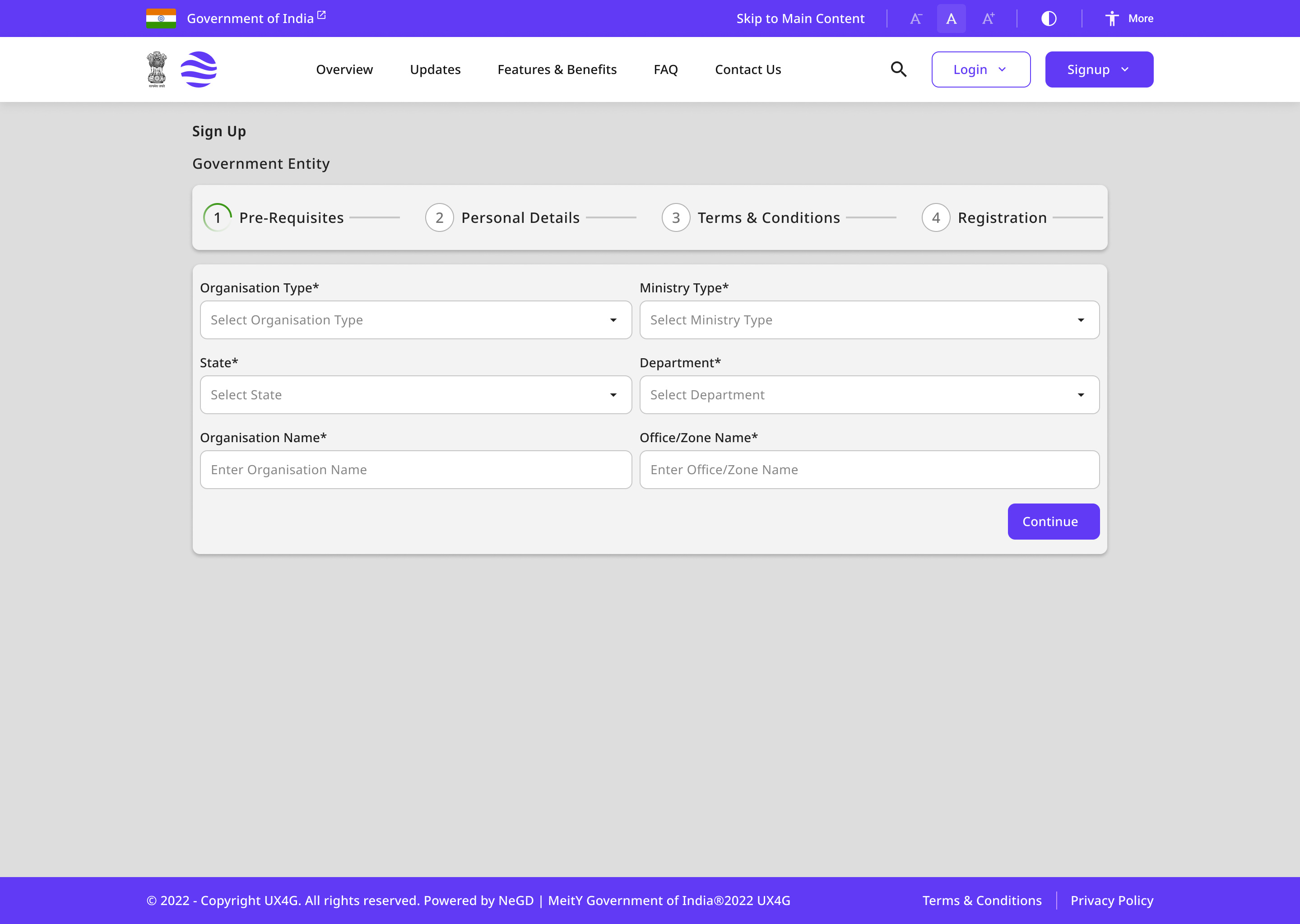
Role-based system architecture , four distinct user types mapped before a single screen was designed.
Key Decisions
Language over UI complexity. Every label, heading, and instruction was simplified to its plainest form. "Publish a Campaign" not "Initiate Campaign Deployment." Government employees navigated the full platform flow without a single interjection during review. For a domain entirely new to them, that was the signal.
Compliance as a natural checkpoint. The creator undertaking and terms acceptance were integrated as a natural step in the application flow , at the moment a creator commits to a campaign, not as a standalone gate. Mandatory to proceed, but designed to feel like a professional commitment rather than a legal warning.
Role-based information architecture. Each role saw only what was relevant to their function. Ministry admins never encountered super admin controls. Influencers never saw internal approval states.
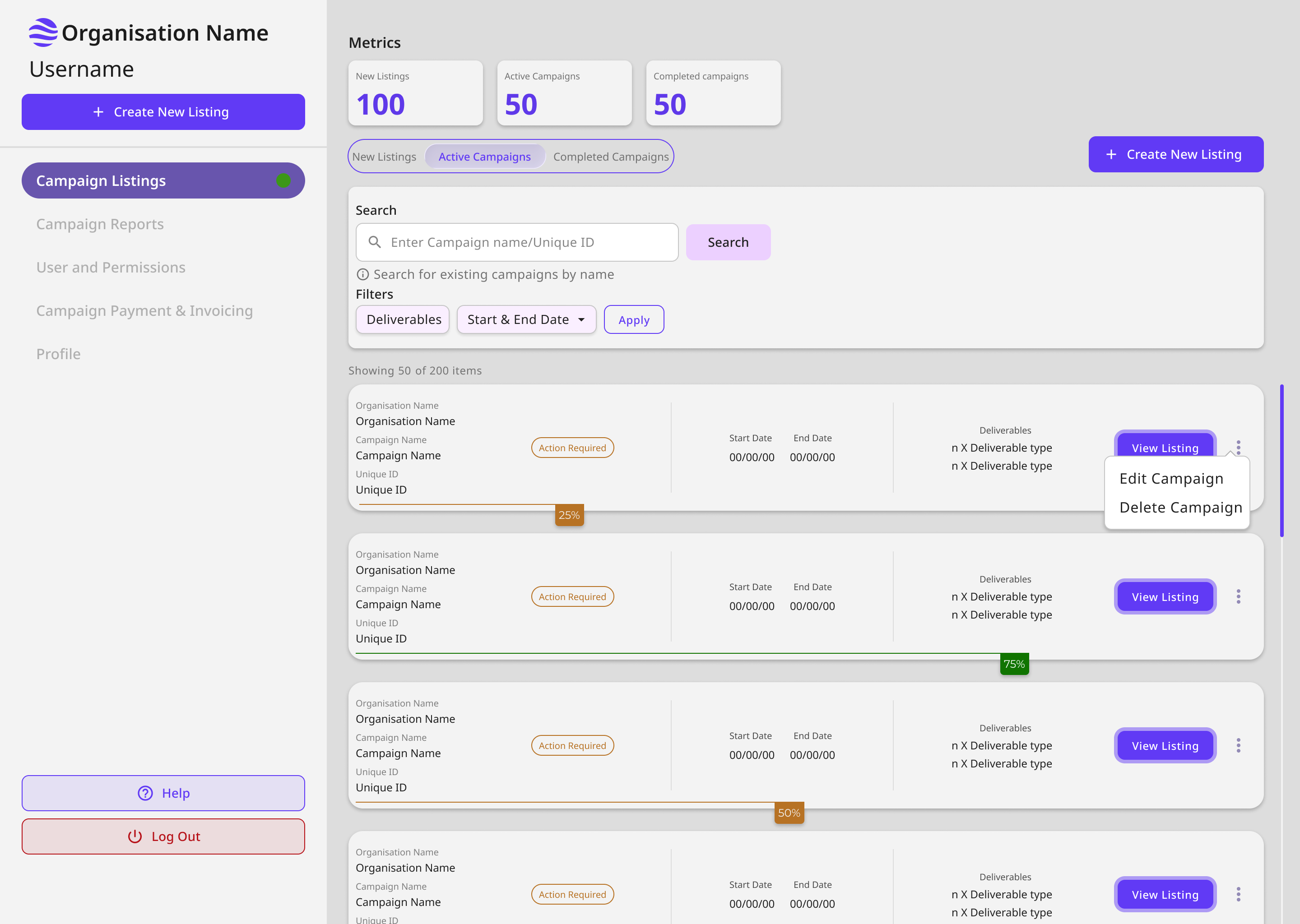
Compliance flow , creator undertaking and terms acceptance integrated as a natural commitment step, not a standalone gate.
Solution
Super admin and ministry role separation , each role sees only what is relevant to their function. Reduces cognitive load across a four-role system.
Campaign application flow , compliance undertaking integrated as a natural commitment step, not a blocking gate.
Ministry admin view , campaign management designed in plain language for users unfamiliar with influencer marketing.
Government stakeholders navigated the full platform without requiring a single explanation.
Designed and shipped a four-role compliance platform in under five weeks , from blank canvas to development-ready handoff.
A domain entirely new to the client team, navigated through design alone.
What I'd Do Differently
With more time I would have run structured usability tests with government employees before development began. Not to validate the flows, but to stress-test the language. These decisions were made on judgment. Testing would have made them evidence-based.
The notification and status experience for creators during application review also deserved more attention. Once a creator applied, the waiting period was underdesigned. On a platform where trust is still being built, that gap matters.